The Schoolhouse — Renovation Notes & Findings
A detailed look at the preserved features uncovered by the renovation
A Possible Earlier Origin
Architectural evidence—including cedar shingles, mortising style, and the use of the word "Academy"—suggests the possibility that the building may have originated as a private school even before 1870, predating the public system. This possibility is under research.
A Broader Significance
As a rare surviving example of a Reconstruction-era schoolhouse in Virginia, Stovepipe Academy helps to establish a probable standardized schoolhouse plan from this era, as its original two-room-plus-cloakroom footprint has been found to mirror that of the Lone Jack School in Rockbridge County (near Glasgow, VA), also dating to the 1870s. This evidence warrants further research to gain important insights into how Virginia's first public schools were designed and built.
The Original Footprint
The earliest structure consisted of a north-south rectangular building with a short east-facing ell. The rectangle was divided into two large classrooms. At the ell was a small cloak room with three doorways: the east-facing exterior main entrance to the schoolhouse; an interior doorway to the north classroom and an interior doorway to the south classroom.
- Interior 5-bead board panel ceilings and walls delineating the schoolhouse's original footprint.
These spaces formed the Stovepipe Academy as it was known to generations of Aldie children before major remodeling c. early 1900s added a large gable wing on the east side. The exact date of this remodeling is the subject of further research, as it is believed the north and south classrooms' original blackboards were covered over at this time. This date would also be significant for differentiation from numerous incremental minor remodelings.
The Fieldstone Foundation
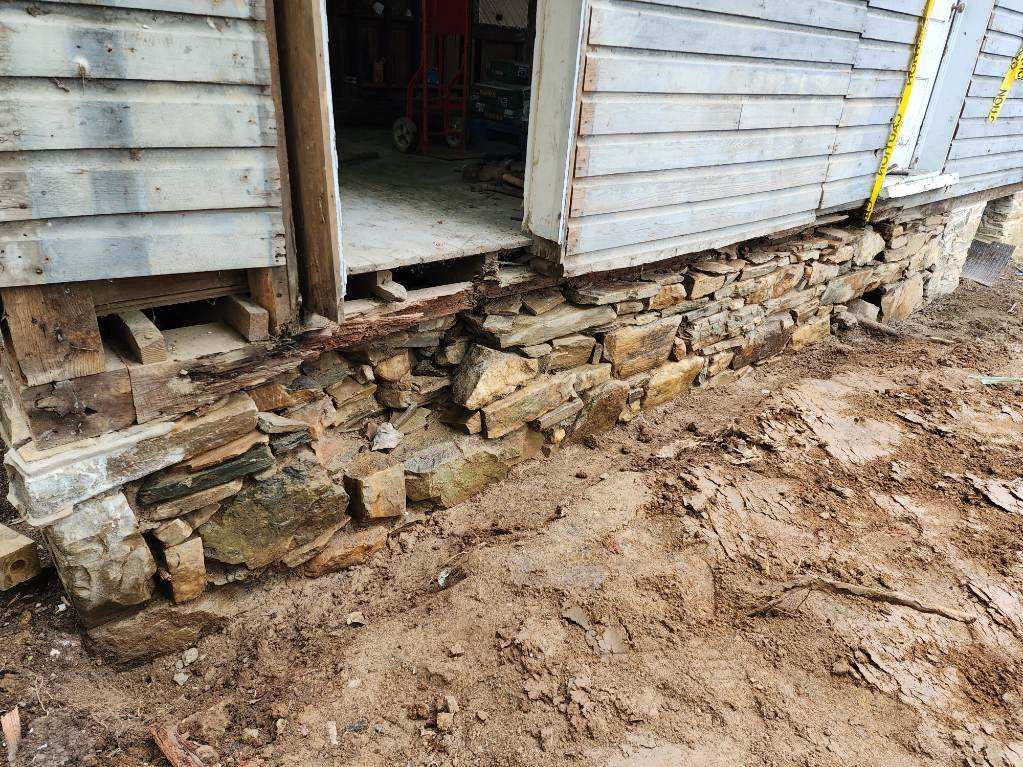
The original fieldstone foundation survived showing original skill overlaid by decades of unskilled maintenance. Unskilled mortaring was removed and the stones were carefully re-pointed and re-mortared.
Many loose stones recovered from underneath the raised foundation were re-purposed for building the front entry piers and south porch piers.
Exteriors and Roofing
The original exterior was clad in Dutch-lap siding and the original roofing of the two-room structure was of cedar shakes. These cedar shakes were covered over by a standing-seam metal roof dating to before the school-era addition of the East Wing. The original stovepipes had been eliminated from the original structure by the time of this early metal roofover, which was solid at the point where the original south classroom stovepipe had projected.
The Stove and Heating
The schoolhouse was heated by at least one wood-burning stove positioned in the northeast quadrant of the large North Classroom, as evidenced by the reinforced sub-flooring found there. Charred timbers preserved overhead mark where the vertical pipe projected through the original shake roof. The piping would have been a prominent visual element both inside and outside the building. The heat would have radiated throughout the rooms by a system of interior piping.
The large South Classroom may have been heated by a second wood-burning stove, however no architectural evidence remained by 2023's renovation to tell for certain.
With school-era East Wing addition and remodel estimated to have taken place in the early 1900s, a standing-seam metal roof installed over the original shake roof was solid where the original North Classroom stovepipe had projected. This indicates a replacement system of heating together with a small masonry chimney, estimated of the same age, added in the northwest corner of the North Classroom.
Insulation
Newspaper insulation was recovered from interior walls and is pending research to ascertain dates and subject matter after piecing the fragments together.
Amenities
No evidence of early wiring, plumbing, or outhouses from the school years survived by the time of the 2023–2024 renovation.
- However along the east wall of the North Classroom were found the remains of a cistern appearing to date to the early schoolhouse, likely used to collect rainwater from the roof for the school's water supply and deserving of further research.
Other Preserved Features
Beyond the blackboards and the stove platform, the renovation uncovered these original materials and details:
- Exterior Dutch-lap siding — surviving mostly intact beneath 20th Century stucco
- The "ghosts" of original exterior and interior moldings — and window/door openings
- Original pine flooring
- The cloak room — a small, functional original main entry space where students hung coats and stored belongings
Each of these features contributes to our understanding of how the school functioned and what daily life was like for the children and teachers who used this space.
The Blackboards
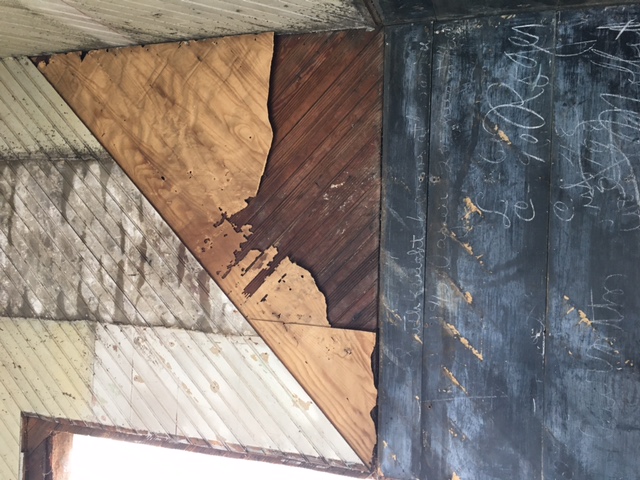
Four sections of original 1870s blackboards were uncovered during renovation of the north and south classroom spaces—a rare and possibly unique discovery that offers a direct, unmediated window into what was being taught in a rural Virginia schoolhouse 150 years ago.
A Remarkable Preservation
These are literally black-painted boards—not slate—and they display agricultural math problems, penmanship and skillful doodles frozen in time since they were covered over some years before the school closed in 1914.
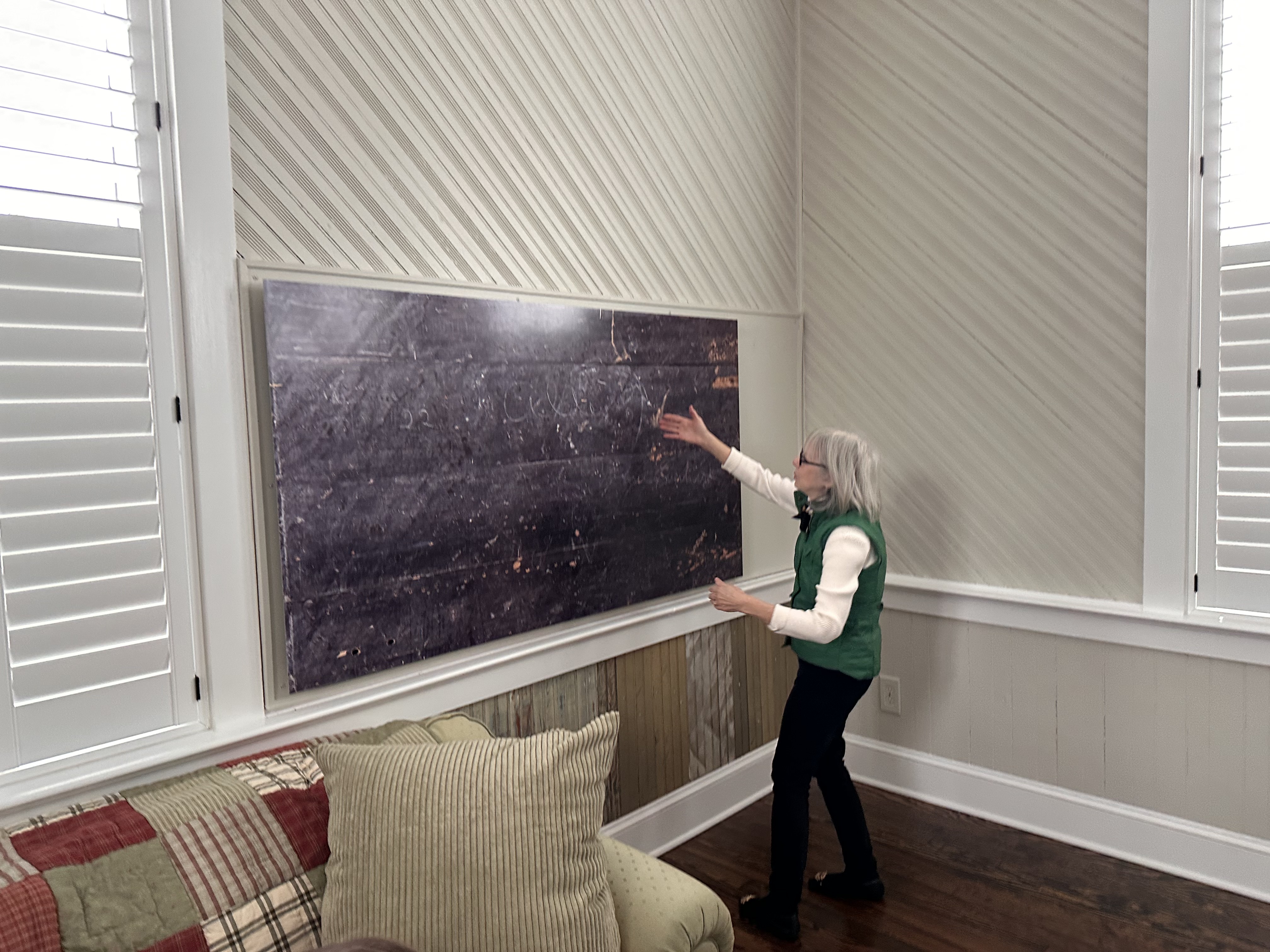
The blackboards were found in both the north and south classrooms, still showing students' lessons. They are now preserved behind life-size photomurals, protecting them for future study while allowing visitors to see what was found.
The discovery of these blackboards is significant because so few physical artifacts from early public school classrooms survive. They provide evidence of curriculum, teaching methods, and student life that would otherwise be lost to history.
"This is not just a building—it's a living archive of what it meant to learn and to teach in rural Virginia in the 1870s."